Why Stress Control Matters in Aluminum CNC Machining
Why Stress Control Matters in Aluminum CNC Machining
CNC machining is the preferred method for manufacturing precision aluminum parts that have complex features and excellent surface finishes. Engineers often choose aluminum because of its low density, cost-effectiveness, and favorable mechanical and thermal properties.
Aluminum alloys have an excellent strength-to-weight ratio and naturally resist corrosion, making them a perfect choice for automotive, architectural, marine, and aerospace applications. In its pure form, aluminum is soft and ductile, so alloys are created to enhance its strength and other characteristics.
Compared to steel, aluminum’s low density provides superior strength-to-weight, making it ideal for applications where reducing weight is critical.
However, design engineers need to be aware that aluminum is also a great conductor of heat, which means parts can warp during production due to the build-up of mechanical and thermal stress.
When dimensions are even just a few microns out of tolerance, the result is costly rework, delays, and disrupted production schedules. That’s why controlling stress isn’t optional, it’s essential.
Product engineers want parts on spec the first time, so the best strategy is to work with a professional custom parts manufacturer who uses good design and manufacturing strategies to keep material deformation under control. Here’s how we do it at Rix.
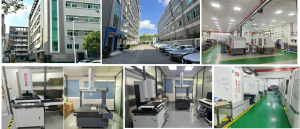
Material Selection: The Foundation of Precision CNC Aluminum Machining
Every grade and temper of aluminum alloy has unique mechanical and chemical properties which determine how the material responds when being CNC machined.
Among the most popular aluminum alloys are 6061 and 7075. These alloys offer good corrosion resistance, high strength and machinability, making them ideal for aerospace, automotive, and marine applications.
The primary alloying element, such as magnesium in 5052, zinc in 7075, or copper in 2007, directly influences its properties and suitability for specific uses. Many of these alloys are heat treatable, and when heat treated, their tensile strength, hardness, and other mechanical properties are significantly enhanced.
Some high strength alloys, like Aluminum 7075, even have hardness comparable to certain steels, making them suitable for demanding, load-bearing applications.
For these reasons, responsible manufacturers should always perform a careful Design for Manufacturability review to ensure the alloy fits the application. This definitely should include consideration for how the raw material was made.
CNC Aluminum Applications: Where Precision and Stress Control Matter Most
In the aerospace industry, CNC machined components are essential for aircraft fittings and structural elements. Here, the need for a high strength-to-weight ratio and natural corrosion resistance are paramount. The ability to produce complex shapes with tight tolerances ensures that every part meets the rigorous standards required for flight safety and performance.
The automotive industry also relies heavily on CNC aluminum for parts that must withstand high stress while minimizing weight. From engine components to lightweight chassis parts, the use of aluminum alloys helps improve fuel efficiency and vehicle performance without sacrificing structural integrity.
Marine applications present another environment where aluminum’s excellent corrosion resistance is critical. Some alloys are highly resistant to saltwater and humidity, making them ideal for boat fittings, hull components, and other marine hardware that must endure harsh conditions.
In the food and pharmaceutical industries, the non-toxic nature and easy-to-clean surfaces of aluminum alloys make them well suited for equipment and machinery.
The electrical industry benefits from aluminum’s high electrical conductivity, so it’s found in connectors, housings, and other components where efficient current flow and corrosion resistance are required. While pure aluminum offers excellent conductivity, it is often alloyed to enhance mechanical properties for specific applications.
Sports equipment manufacturers take advantage of aluminum CNC machining to create lightweight yet robust products such as bicycle frames and other performance gear. Additional surface finishing, such as powder coating or anodizing, can further protect the material while enhancing its aesthetic appeal.
As we’ve seen, selecting the right aluminum alloy for CNC machining involves considering several factors, including the required strength, corrosion resistance, and machinability. For example, alloys with higher magnesium content provide excellent corrosion resistance, making them ideal for marine and outdoor applications, while those with higher copper content offer good fatigue resistance for high-stress environments.
As technology continues to evolve, the ability to produce complex aluminum parts with CNC machines will only expand, enabling manufacturers to meet the growing demands of aerospace, automotive, marine, and many other sectors.
With their combination of high strength, low weight, and excellent corrosion resistance, CNC machined aluminum parts are set to remain at the forefront of innovation across numerous applications.
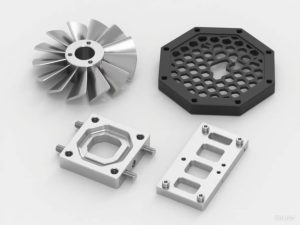
Achieving Stress-Free Precision in Aluminum CNC Machining
It’s possible to manufacture precision parts with CNC machined aluminum. The secret is careful process control combined with a sophisticated understanding of how the material responds to thermal distortion.
We know it’s unacceptable when critical aluminum parts don’t meet spec. As a professional manufacturing supplier of bespoke CNC aluminum machining services,Rix is here to make your product development journey seamless and stress free. We support all stages of production, from proof-of-concept prototypes to full mass production and every volume in between.
E-mai: daisy.d@rixmanufacture.com
LinkedIn: Haiyuan(Daisy) Huang